Pickleball Tutor Mini Review
Consensus score
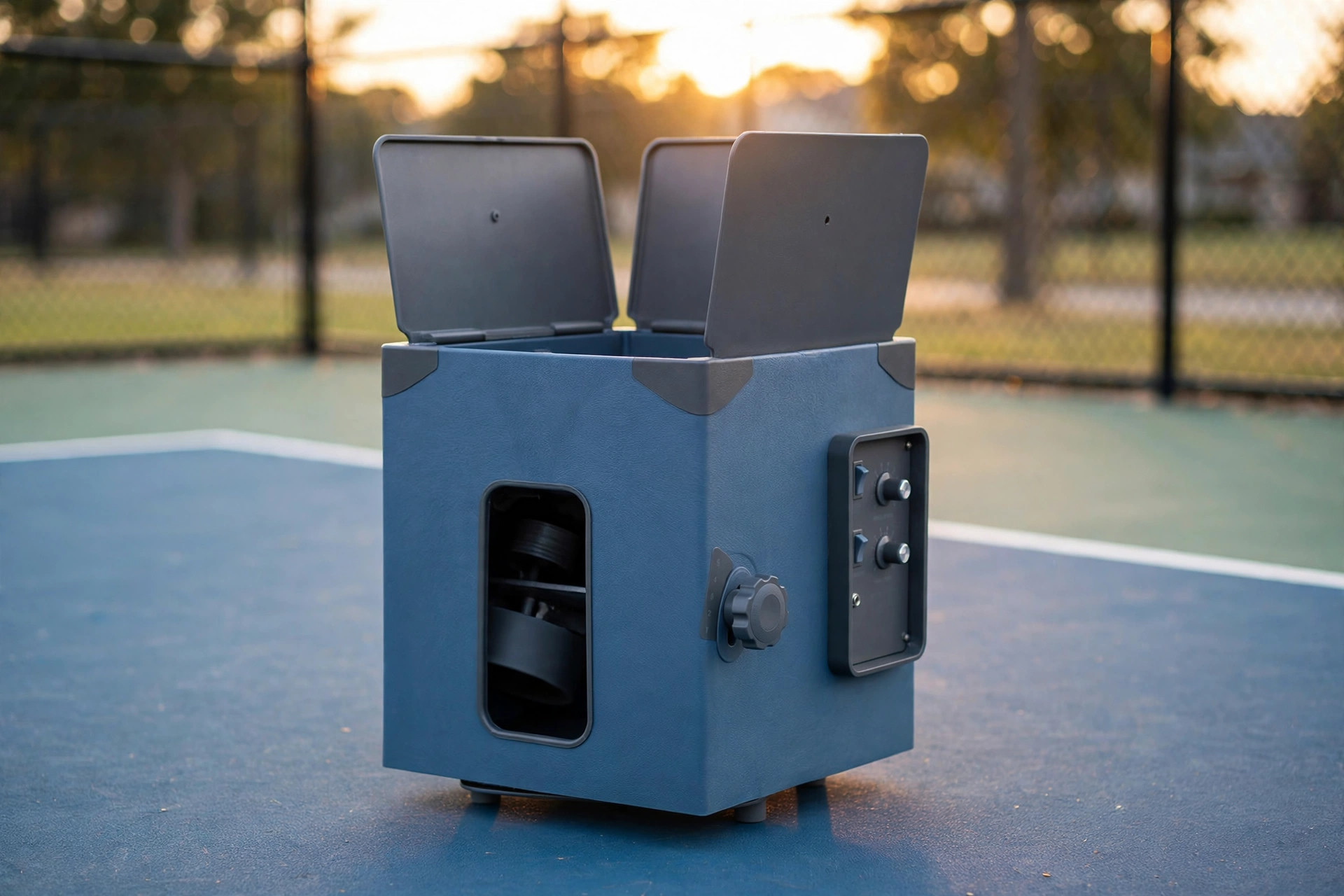
Every ball machine promises the world. The Tutor Mini promises almost nothing, and keeps every promise. Twenty-four pounds, sixty balls, up to 50 mph, no spin, no remote, no app. It is the cheapest machine from the best-selling ball machine brand on earth, and reviewers love it for exactly what it refuses to be: complicated. Older players call it the best machine for anyone who does not want to lug heavy gear. Beginners call it the perfect first machine. Nobody calls it exciting, and that is the point.
We may earn a commission when you buy through links on this page. Our rankings are never influenced by commissions or brand partnerships. Consensus score 83/100 (Very Good) — aggregated Oct 2026 from expert and owner reviews — how we rank.
The consensus verdict
Best for
Portability-first players: beginners, older players, and anyone whose car trunk is the equipment room. If your priority is getting to the court and hitting 300 balls without a fuss, this is the machine. Two built-in handles, 24 pounds, done.
Not for
Anyone who wants to practice against spin. The Mini throws flat balls, period. It also has no remote, so you will walk back to the machine every time you want to change something. Sixty balls means reloading every few minutes at fast feed rates.
Consensus 83/100 · Very Good
Weighted from long-form expert reviews, retailer owner reviews, and comparison roundups. Portability and reliability are the consensus standouts; the 60-ball hopper and total lack of spin are the consensus caps on the score.
Specs
| MSRP | $950 |
|---|---|
| Weight | 24 lbs (two built-in carry handles) |
| Ball capacity | ~60 pickleballs (about one pickup basket) |
| Ball speed | Up to 50 mph |
| Ball feed | Adjustable, every 2 to 10 seconds |
| Spin | None (flat feeds only) |
| Oscillation | Fixed feed on base model; oscillator version available |
| Elevation | Manual, groundstroke to lob |
| Battery | Rechargeable, 3–4 hours per charge; smart charger included |
| Remote | Not available |
| Extras | Start-up time delay (walk to the other side before balls fire) |
| Warranty | 3 years (Sports Tutor standard) |
Specs from Sports Tutor and retailer listings; figures vary slightly between retailers (unit-to-unit variance applies).
What reviewers agree on
Strengths
- It weighs 24 pounds. This is the whole pitch and reviewers never stop mentioning it. Owners in their 60s and 70s call it the only machine they will carry. Two handles, toss it in the trunk, done. Every heavier machine on this page loses this comparison by definition.
- Dead simple, dead reliable. No app to update, no remote to lose, no spin dial to mis-set. Reviewers describe setup as load balls and go, and Sports Tutor's reputation for building machines that last years shows up in owner after owner. One reviewer runs theirs in a 22-by-14-foot practice room and calls speed 5 out of 10 nearly as fast as real-life drives.
- Consistent throws. What it does, it does the same way every time. For grooving a third-shot drop or a dink motion, consistency beats features. Multiple reviewers bought it specifically for repetition volume.
- The budget floor, from the category leader. At $950 it is the cheapest machine Sports Tutor makes, and Sports Tutor is the best-selling ball machine brand in the world. You are not buying a gamble brand to save money.
Weaknesses & caveats
- No spin, no remote, no negotiation. Flat balls only. If your practice goal is handling heavy topspin drives, this machine cannot help you. And without a remote, every settings change is a walk across the court.
- Sixty balls goes fast. At a 2-second feed rate you are reloading every two minutes. Reviewers who drill at pace call the small hopper the Mini's real limitation, more than the missing features.
- Oscillation costs extra. The base model throws to one spot. The oscillator version fixes that, but confirm which version you are buying. Several retailers list both and the price difference is real.
- Occasional rotary quirks. A small number of owners report the feed mechanism needing attention over time. Sports Tutor's service reputation is strong, but it is a moving part and moving parts wear.
Synthesized from expert long-form reviews, retailer owner reviews, and comparison roundups. How we rank →
Who it's for
Who it's for
- You want the lightest machine worth owning and will trade features for portability
- You are a beginner grooving fundamentals: dinks, drops, serves, groundstrokes
- You practice alone and want 300 consistent balls, not a robot opponent
Who should skip it
- You need spin practice. This is the wrong machine, full stop
- You hate reloading. Sixty balls will annoy you within a week
- You want a remote. It does not exist for this model
The value question
The Mini is $950. The Lobster the pickle is $1,139. That $189 gap buys you topspin and backspin, a remote, random oscillation, and more than double the ball capacity. If you know you want spin eventually, the Mini is not the cheap option. It is the expensive way to learn that. But if you genuinely value 24 pounds over everything, nothing else in this tier touches it, and reviewers who bought it for that reason have zero regrets.
Where to buy
Buying through this link supports our work at no extra cost to you.
← Best ball machines by price tier · Tutor Spin review · Lobster the pickle review · Slinger review
Tutor Mini FAQs
Does the Tutor Mini have spin?
No. Flat feeds only. Spin starts with the Tutor Spin (sidespin) and Tutor Plus (topspin and backspin).
Does the Tutor Mini oscillate?
The base model is fixed-feed. An oscillator version adds random court-wide placement. Confirm which version you are buying.
How many balls and how much battery?
About 60 balls per load and 3 to 4 hours per charge, with an auto-shutoff smart charger included.