Luzz Cannon XPP M1 Review
Consensus score
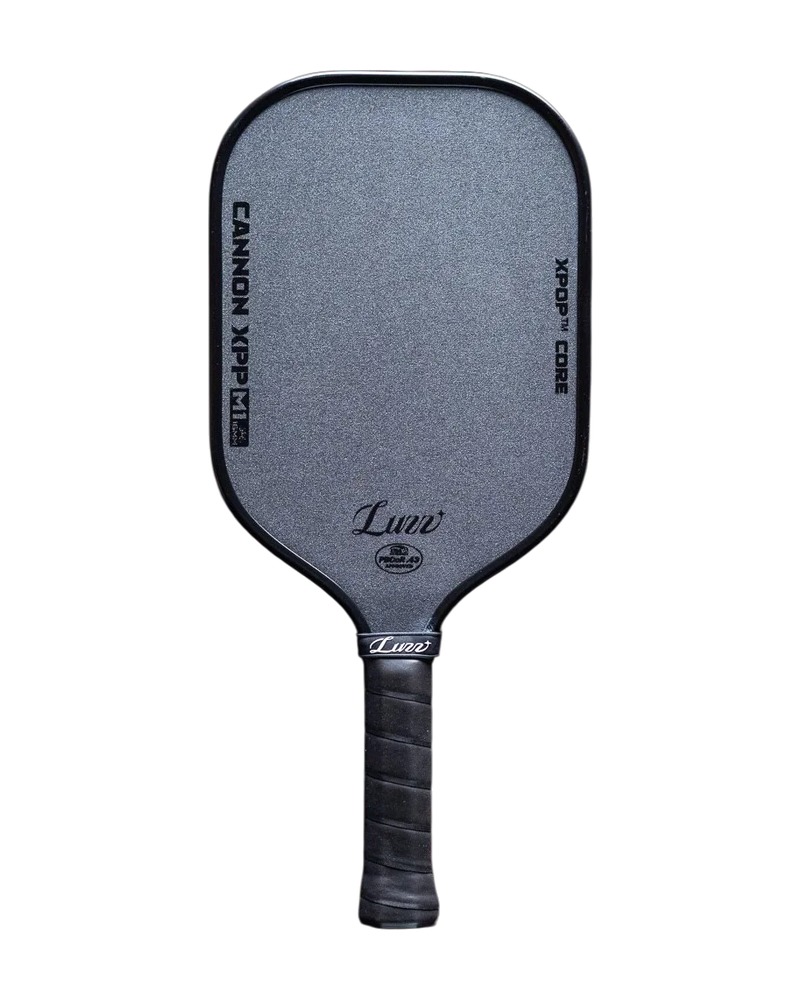
Luzz has been chasing a durable grit for years. Three attempts, none of them Tier 1. The Cannon XPP M1, launched October 15, 2026, is the one that landed: a green silicon carbide face over a full-foam XPOP core, and two independent labs put its spin at the top of their databases. Pickleball Effect measured 2,218 RPM, the most they have ever recorded. John Kew's ball cannon logged 2,476 RPM going to 2,524 after the wear phase, a provisional Tier 1. The rest of the paddle is a heavy, head-biased power build, swing weight around 122, that leans on pop more than raw pace. At $179 list, or about $152 with a reviewer code, it is the cheapest ticket into elite spin we have seen.
We may earn a commission when you buy through links on this page. Our rankings are never influenced by commissions or brand partnerships. Provisional consensus score 86/100 (Excellent) — aggregated Nov 2026 from lab data and expert reviews across 4 sources — how we rank.
The consensus verdict
Best for
Spin-first players who brush the ball and want the most bite under $200. If your game is heavy topspin drives and dipping thirds, this is the value play of the year.
Not for
Quick-hands kitchen players. The head weight is real at a 122 swing weight, and fast exchanges are where you will feel it. Also not for anyone chasing maximum raw drive pace.
Provisional consensus 86/100 · Excellent
Weighted from Pickleball Effect (4.6/5, lab plus court), John Kew (ball-cannon spin durability, provisional Tier 1), a YouTube head-to-head where it ranked first in power and spin, and PaddleReviewHub launch coverage. Provisional because it launched October 15, 2026: there is no owner-review corpus yet, and the power tier is genuinely debated, with PE filing it as Power+ while Kew calls it the low end of Power.
Specs
| Price | $179 list · often ~$152 with reviewer codes |
|---|---|
| Shape | Elongated · 16.54" × 7.48" |
| Thickness | 16mm |
| Face | T700 raw carbon fiber with green silicon carbide grit |
| Core | XPOP full foam (EPP core with EVA band) |
| Weight | 8.0–8.1 oz |
| Handle | 5.5" · 4.125" grip |
| Measured (third-party) | Swing weight 121–123; twist weight 6.23–6.3; balance point ~244mm; spin 2,218 RPM (Pickleball Effect) and 2,476→2,524 RPM (John Kew cannon) |
| Approval | USAP approved (entry 13765, added Oct 1, 2026) |
| Launched | October 15, 2026 |
Specs from lab measurements and the USAP approval list; Luzz has not published a full maker spec sheet. Measured figures vary unit to unit.
What reviewers agree on
Strengths
- Spin that leads the lab databases. 2,218 RPM in Pickleball Effect testing, the highest they have measured, and 2,476 rising to 2,524 after wear in John Kew's cannon. It rewards brushing: the harder you work the ball, the more it gives back.
- Grit that holds. 93% grit retention in PE durability testing against an 80% raw-carbon average (Tier 2), and Kew's cannon showed spin going up, not down, after the wear phase. Luzz finally has a durable surface.
- Soft, dense, still communicative. The feel is plush without being disconnected. PE compared it to a more powerful Six Zero Coral Pro: soft and dense, but you still feel where the ball is going.
- Pop-heavy power. 88th percentile pop keeps counters and speedups fast even when the head weight has you a beat late. In a five-paddle YouTube shootout it finished first in both power and spin rankings.
- The price. $179 list, ~$152 with a code. Nothing else with this spin data costs this little.
Weaknesses & caveats
- Head-heavy and proud of it. Swing weight around 122 with the weight toward the head. Kitchen hands battles are where you pay for it, and PE would not add a gram of tape to it.
- Power is pop, not pace. The 80th percentile drive speed is solid, not scary. If your game needs free baseline pace, the pop-forward profile will leave you wanting.
- Elongated only. PE's own take: a hybrid or widebody would suit the head-heavy design better. No word on other shapes yet.
- Brand-new, thin track record. The lab data is excellent, but long-term real-world durability is an open question and there are no scored owner reviews yet.
Synthesized from lab reviews (Pickleball Effect, John Kew), a YouTube head-to-head comparison, and launch coverage (PaddleReviewHub, Pickld). How we rank →
Who it's for
Who it's for
- You shape shots with spin and want the most RPM per dollar in 2026
- You liked the Coral Pro idea but wanted more offense with it
- You play a drive-heavy game from the baseline and mid-court
Who should skip it
- Kitchen-battle players who need quick hands. The rest of the $100–200 tier swings faster
- Anyone who wants maximum raw pace over spin
- Players who prefer light paddles. This one starts at 8.0 oz and only gets heavier in the hand
Where to buy
List is $179; reviewer codes (PRH, JOHNKEW, PICKLEBALLER) have taken 15% off, around $152. Buying through this link supports our work at no extra cost to you.
← RPM Jade review · Holbrook Fuze review · Best paddles $100–200 · Grit & spin explained
Cannon XPP M1 FAQs
Cannon XPP M1 vs the old Luzz Cannon?
Different paddle, same name. The XPP moves to a full-foam XPOP core and a silicon carbide grit face. The old Cannon was a Gen 3 honeycomb build.
Is the Cannon XPP M1 a power paddle?
Pop-forward power. Counters and speedups are the weapon; baseline drives are solid, not nuclear. PE says Power+, John Kew says the low end of Power.
Is it worth it at $152 with a code?
At $179 it is already a strong value for lab-verified elite spin. At $152, holy schnikes, it is the cheapest elite-spin paddle with real data behind it.